
A Comprehensive Resource for Research Peptides

This page serves as the definitive resource for every research peptide available through Pharma Lab. Sixty-five unique peptides, grouped into ten clearly defined categories, are presented here as a single reference so that researchers may readily identify which products are relevant to their areas of investigation. For each category, a brief overview provides the research context, followed by detailed entries for each compound outlining its nature and principal applications in laboratory settings.
Pharma Lab maintains a minimum purity of 99% for each peptide in the catalogue, determined using HPLC purification and confirmed by mass spectrometry. For complex sequences, a threshold of 98% or higher applies. There are no third-party intermediaries in the supply chain. Products come directly from manufacturers, and batch-level testing ensures that analytical data corresponds precisely to the actual material provided. Formulations vary by product and include lyophilised vials, nasal sprays, pre-mixed peptide pens and capsules. Buy Gonadorelin peptide Bacteriostatic water is available for reconstitution.
All products on this page are intended exclusively for in-vitro laboratory research. They are not intended for human or animal consumption and may not be marketed as drugs, food products, cosmetics or medicinal formulations. The descriptions that follow reflect the available scientific literature and current research context for each peptide. They are educational in nature and should be read as such.
The ten categories discussed below include growth hormone secretagogues and related peptides, tissue repair and regeneration, ageing and longevity, immune regulation and antimicrobial research, metabolic and adipose tissue research, cognitive function and neuroprotection, reproductive and endocrine research, musculoskeletal and myostatin pathway research, dermatological and cosmetic research, and specialty compounds. This organisation reflects how the research community typically utilises these peptides, though many compounds naturally span more than one area of investigation.
Growth Hormone Secretagogues and Related Peptides

Research on growth hormone remains among the most active areas of peptide science. These peptides comprise a variety of compounds that stimulate the release of growth hormone from the anterior pituitary through two principal mechanisms: the GHRH receptor pathway and the ghrelin receptor (GHS-R1a) pathway. Purchase HCG Peptide USA Understanding these molecular pathways is central to the work of scientists investigating somatotropic axis regulation, body composition and age-related changes. Pharma Lab provides eleven peptides within this research category for supporting investigations into peptide-mediated regulatory pathways.
CJC-1295 DAC
A synthetic GHRH analogue incorporating a Drug Affinity Complex that substantially extends its circulating half-life compared to native GHRH. This sustained activity makes it particularly useful in research protocols investigating prolonged growth hormone elevation and its downstream effects.
CJC-1295 No-DAC (Modified GRF 1-29)
The same GHRH analogue without the DAC modification, resulting in a shorter duration of action. Some researchers favour this form for studies that aim to pulse growth hormone release, more closely replicating the natural, pulsatile secretion pattern observed under physiological conditions.
GHRP-2
A ghrelin receptor agonist that acts through the GHS-R1a pathway to stimulate growth hormone release. Literature indicates that GHRP-2 produces a pronounced growth hormone response and has a distinct receptor binding profile, making it a valuable tool for researchers studying secretagogue pharmacology.
GHRP-6
Also a ghrelin receptor agonist acting through GHS-R1a, though with a notably different side-effect profile in preclinical models compared to GHRP-2. Some published literature highlights the appetite-stimulating properties of GHRP-6, which adds an additional dimension to its research applications in metabolic studies.
Hexarelin
A ghrelin mimetic that is routinely observed to produce one of the greatest growth hormone responses in studies that optimally challenge secretion. Some desensitisation has been noted with repeated dosing in preclinical models, which is itself an area of research interest for investigators studying receptor dynamics.
Ipamorelin
Distinguished within this group by its selective profile. Studies conducted with Ipamorelin demonstrate an increase in growth hormone release without simultaneously elevating cortisol or prolactin levels, making it a cleaner research tool when the objective is to isolate and examine the growth hormone pathway independently.
Sermorelin
A 29-amino-acid analogue of GHRH, containing the first 29 amino acids of the native 44-amino-acid hormone. It mediates its actions through the GHRH receptor and has been extensively used to study age-associated decline in growth hormone secretion and pituitary responsiveness.
Tesamorelin
A stabilised GHRH analogue that has been investigated in the context of visceral adiposity, with particular emphasis on lipodystrophy models. Its structural modifications confer enhanced stability and activity duration compared to native GHRH, making it useful in longer-term research protocols.
MK-677 (Ibutamoren)
Technically a small-molecule ghrelin receptor agonist rather than a peptide compound, MK-677 is included alongside growth hormone peptides because its mechanism of action and research applications directly overlap with those of peptide secretagogues. It is orally active, which distinguishes it from the injectable peptides in this category.
HGH 191AA
Recombinant human growth hormone containing the complete 191-amino-acid polypeptide sequence identical to pituitary-derived growth hormone. It serves as the gold standard reference compound against which many growth-hormone-dependent research agents are compared in experimental settings.
HGH Fragment 176-191
A C-terminal fragment of human growth hormone comprising amino acids 176 through 191. This fragment has been specifically characterised for its lipolytic activities, studied independently from the broader metabolic effects associated with the full-length growth hormone molecule.
Tissue Repair and Regeneration Peptides

Tissue repair studies encompass a range of peptides that play significant roles in wound healing, angiogenesis, cellular migration and structural tissue regeneration. The peptides in this category are among the most frequently requested by investigators working with musculoskeletal, gastrointestinal and connective tissue models. Pharma Lab provides five peptides in this research area.
BPC-157 (Body Protection Compound-157)
A synthetic pentadecapeptide derived from a protective protein found in human gastric juice. BPC-157 has an extensive research history relating to tendon and ligament healing, gastrointestinal mucosal protection, angiogenesis, and modulation of inflammatory responses in preclinical models. Additionally, research has explored its interactions with the nitric oxide system and multiple growth factor pathways. BPC-157 possesses one of the broadest research profiles in the tissue repair field, covering numerous tissue types and a variety of injury models.
TB500 (Thymosin Beta-4 Analogue)
A synthetic peptide that replicates the active region of Thymosin Beta-4, a naturally occurring 43-amino-acid peptide involved in multiple cellular processes including actin regulation, cell migration and angiogenesis. In preclinical settings, TB500 has been studied for its role in wound healing, cardiac repair following injury and anti-inflammatory responses. The relationship between TB500 and BPC-157 is particularly noteworthy — these two peptides appear to offer complementary effects. BPC-157 primarily influences growth factor signalling pathways and angiogenesis, while TB500 acts on actin dynamics, regulating cellular migration and differentiation. Published studies have investigated combinations of these compounds and reported potential synergistic effects on wound closure rates and tissue remodelling, based on early preclinical data suggesting improved outcomes compared to treatment with either peptide alone. This complementary profile has made BPC-157 and TB500 one of the most studied peptide combinations in tissue recovery research.
MGF Peptide (Mechano-Growth Factor)
A splice variant of IGF-1 that is expressed in muscle tissue following mechanical stress or injury to muscle fibres. In laboratory models, it has been studied in relation to muscle repair, satellite cell activation and post-exercise recovery processes. MGF is of particular interest to researchers investigating the molecular mechanisms underlying muscle tissue adaptation to mechanical loading.
PEG-MGF
The PEGylated form of MGF, in which a polyethylene glycol chain is attached to extend the compound's duration of activity in biological systems. This modification increases retention time and makes PEG-MGF potentially more suitable for research protocols that require prolonged exposure to the growth factor variant.
PTD-DBM
Part of a relatively new area of tissue repair research. This peptide conjugate has been studied for its role in inducing osteogenic differentiation — the process by which precursor cells are converted into bone-forming osteoblasts. Research focused on PTD-DBM is driven by its potential applicability in bone fracture healing and skeletal regeneration models.
Peptides for Ageing and Longevity Research

Peptides have become the subject of substantial research in the field of ageing over the past two decades. The compounds in this category are studied for their effects on telomere maintenance and protection, cellular senescence clearance pathways, mitochondrial respiration and tissue remodelling. Pharma Lab offers eight peptides and related compounds relevant to this research area.
Epithalon (Epitalon)
A synthetic tetrapeptide with the sequence Ala-Glu-Asp-Gly, originally synthesised in the early 1980s. It is primarily studied for its reported ability to promote telomerase activity — the enzyme that maintains or extends telomeres at chromosome ends. Since telomere shortening is a well-established hallmark of cellular ageing, Epithalon's influence on this pathway has made it one of the most cited peptides in longevity research. The compound originates from the work of Professor Vladimir Khavinson at the Saint Petersburg Institute of Bioregulation and Gerontology.
FOXO4-DRI
A D-retro-inverso peptide designed to target senescent cells by disrupting the interaction between the FOXO4 transcription factor and the tumour suppressor protein p53. By blocking this binding, FOXO4-DRI has been investigated as a means of selectively inducing apoptosis in senescent cells without affecting healthy ones. This selective mechanism positions it within the emerging field of senolytic research, which seeks compounds that can promote the clearance of senescent cells from tissues.
Humanin
A 24-amino-acid peptide encoded by mitochondrial DNA, rather than nuclear DNA, classifying it as a mitochondrial-derived peptide. Humanin has been studied primarily for its cytoprotective properties, including anti-apoptotic effects against cellular stress induced by amyloid-beta and other damaging agents. Its mitochondrial origin makes it particularly relevant to researchers investigating organelle-specific contributions to cellular resilience and ageing.
MOTS-C
A 16-amino-acid mitochondrial-derived peptide examined as a regulator of metabolism, insulin sensitivity and exercise physiology. MOTS-C may influence AMPK-mediated energy homeostasis, connecting it to broader research on metabolic regulation and the cellular mechanisms underlying physical activity. Although it shares a mitochondrial origin with Humanin, its research applications are distinct.
NAD+ (Nicotinamide Adenine Dinucleotide)
A coenzyme found in every living cell, critical to hundreds of metabolic processes including energy production, DNA repair and sirtuin activation. Substantial evidence demonstrates that NAD+ levels decline with age across multiple tissues, and this decline is linked to mitochondrial impairment, diminished DNA damage response and disrupted epigenetic signalling. Research on NAD+ precursors and direct supplementation continues to expand across multiple model organisms.
GHK-Cu (Copper Peptide)
A naturally occurring tripeptide-copper complex found in human plasma, saliva and urine. It is well established in research for its role in stimulating collagen production, enhancing tissue healing and modulating gene expression involved in tissue remodelling and regeneration. GHK-Cu has applications in both anti-ageing research and dermatological studies.
Pinealon
A tripeptide (Glu-Asp-Arg) from the Khavinson school of peptide bioregulation. Pinealon has been identified and studied for its neuroprotective properties using brain tissue models, with both in-vitro and in-vivo research investigating its effects on gene expression related to neural cell survival and function.
Cartalax
A tripeptide bioregulator (Ala-Glu-Asp) that has received attention in the context of age-related joint degeneration. Research on Cartalax focuses on its effects on cartilage tissue integrity and chondrocyte function, making it relevant to studies of joint health and the molecular mechanisms underlying cartilage maintenance during ageing.
Immune Regulation and Antimicrobial Research Peptides

Peptide approaches in immunology are primarily directed toward immune system modulation or direct antimicrobial activity against pathogens including bacteria and viruses. This category comprises seven peptides, spanning thymic peptide bioregulators, antimicrobial peptides derived from the innate immune system, and neuropeptides with documented immunomodulatory effects. Pharma Lab provides all seven for research purposes.
Thymosin Alpha-1
The most extensively studied immunomodulatory peptide in published literature. Thymosin Alpha-1 is a naturally occurring 28-amino-acid peptide derived from the thymus gland. Its role in promoting T-cell maturation and proliferation, enhancing natural killer cell activity, and modulating dendritic cell function has been investigated closely. Research applications have been reported across domains including hepatitis B, hepatitis C, HIV and broader immunodeficiency models. It remains a reference compound for researchers working in immunomodulation.
LL-37 (Human Cathelicidin)
The only cathelicidin antimicrobial peptide produced in humans, LL-37 is an alpha-helical 37-amino-acid peptide with broad-spectrum activity against bacteria, viruses and fungi. It has been established as a key component of the innate immune response. Beyond its direct antimicrobial function, LL-37 is also investigated in the context of immune cell chemotaxis, wound healing and modulation of inflammation. The peptide has additionally been recognised for its ability to disrupt bacterial biofilms, a significant challenge in chronic infection research. Its dual antimicrobial and immunomodulatory profile makes LL-37 one of the most versatile compounds available for researchers working within infectious disease, innate immunity and host defence peptide biology.
Thymalin
A polypeptide complex from the Khavinson research tradition, investigated for its effects on thymic function and immune cell maturation. It is particularly relevant to research on age-related decline in immune system competence, where thymic involution contributes to diminished adaptive immunity.
Vilon
A dipeptide (Lys-Glu) investigated as a bioregulator of gene expression in immune cells, with particular emphasis on its regulatory effects on T-helper and cytotoxic T-cell differentiation. Research has suggested that Vilon may activate genes that are downregulated during senescence, and it has also been observed to promote cell division while acting as a transcription factor modulator.
KPV
A tripeptide (Lys-Pro-Val) derived from the C-terminal end of alpha-melanocyte-stimulating hormone. KPV has been explored for its anti-inflammatory properties and its function in mucosal immunity, particularly in preclinical models of intestinal inflammation relevant to inflammatory bowel disease research.
VIP (Vasoactive Intestinal Peptide)
A well-studied 28-amino-acid neuropeptide that possesses potent anti-inflammatory, neuroprotective and vasodilatory effects. Research applications extend to respiratory inflammation, autoimmune models and neuroinflammation, making it a broadly applicable tool in immunological and neurological research.
Bronchogen
A tripeptide bioregulator researched in terms of bronchial epithelial cell activity and respiratory mucosal function. It represents the Khavinson bioregulator approach applied specifically to pulmonary biology and respiratory tract research.
Metabolic and Adipose Tissue Research Compounds

Metabolic research encompasses the study of energy expenditure, fat cell biology, appetite regulation and the cellular mechanisms that control how organisms store and utilise fuel. The six compounds in this category illustrate the breadth of approaches taken by researchers working in this space. Pharma Lab provides all six for laboratory use.
5-Amino-1MQ
A small-molecule inhibitor of nicotinamide N-methyltransferase (NNMT), an enzyme involved in energy metabolism that degrades nicotinamide, thereby depleting intracellular NAD+ levels. By inhibiting NNMT, 5-Amino-1MQ enables research into fat cell metabolism, energy expenditure and the regulation of NAD+ salvage pathways. While technically not a structural peptide, its research applications place it firmly within the metabolic peptide research domain.
AOD-9604
A modified human growth hormone fragment consisting of a truncated and stabilised derivative of the growth hormone molecule's lipolytic region. It has been studied for its ability to stimulate lipolysis without the general anabolic or diabetogenic effects associated with native growth hormone. This selectivity enables its use as a research tool to isolate specific lipolysis pathways from broader growth hormone signalling circuits.
AICAR
A widely used AMP kinase activator, first identified through studies of cellular energy sensing. At the cellular level, AICAR mimics exercise effects by activating AMPK, a master regulator involved in glucose uptake, fatty acid oxidation and mitochondrial biogenesis. AICAR is perhaps the most well-established pharmacological AMPK activator available for laboratory investigation.
FTPP Adipotide
A peptide mimetic that targets the endothelial receptor prohibitin, expressed on blood vessels supplying white adipose tissue. Unlike other compounds in this category that target fat cells directly, Adipotide targets the vasculature of fat deposits. Its effects on fat mass reduction have been explored in several preclinical animal studies.
Tesofensine
A serotonin-noradrenaline-dopamine reuptake inhibitor originally developed for neurological purposes, though its effects on appetite suppression and energy balance have attracted research interest. While not a peptide, its relevance to the wider metabolic research community and its regular co-investigation alongside peptide-based metabolic agents warrant its inclusion in the catalogue.
The diversity of mechanisms represented in this category reflects the complexity of the metabolic pathways being studied. From NNMT inhibition to vascular-targeting ligands, each compound provides a specific avenue into the investigation of energy regulation, lipid metabolism and adipose tissue biology. Pharma Lab provides all six to ensure researchers have access to the complete range of tools available for this area of study.
Cognitive Function and Neuroprotection Peptides

Neuroprotective and nootropic peptide research investigates compounds that influence cognitive processes, neuronal survival, sleep architecture and the stress response. Pharma Lab supplies seven compounds in this category, each derived from a distinct research tradition and targeting specific aspects of central nervous system function.
Selank
A synthetic heptapeptide derived from the naturally occurring immunomodulatory peptide tuftsin, with an additional Gly-Pro extension conferring increased enzymatic stability. Developed at the Institute of Molecular Genetics in Moscow, Selank has been analysed for its anxiolytic potential with particular emphasis on its effects on GABAergic neurotransmission and brain-derived neurotrophic factor expression.
Semax
A synthetic analogue of the ACTH(4-10) fragment, also developed at the same institute. Semax has been investigated for cognitive-enhancing and neuroprotective activity, with research examining its effects on neurotrophic factors, cerebrovascular function and neuronal protection under conditions of stress or injury.
DSIP (Delta Sleep-Inducing Peptide)
A nonapeptide originally isolated from rabbit cerebral venous blood during sleep induction studies. Beyond its initial discovery context, DSIP has been studied as an endogenous neuropeptide involved not only in sleep promotion but also in stress tolerance, pain modulation and regulation of the neuroendocrine system.
Adamax
An experimental nootropic peptide from the racetam class that has been explored for its potential effects on cognitive and memory function in laboratory models. It represents one of several racetam-derived compounds under investigation for their influence on learning and memory processes.
P-21 Peptide
A synthetic analogue of Ciliary Neurotrophic Factor (CNTF), engineered to cross the blood-brain barrier. P-21 has been investigated using models of neurogenesis — the process by which new neurons are generated from neural stem cells — with particular focus on the dentate gyrus region of the hippocampus, an area central to learning and memory.
Orexin A (Hypocretin-1)
A neuropeptide released by neurons in the hypothalamus with an established role in wakefulness, arousal, appetite regulation and energy homeostasis. Orexin A has attracted significant research interest in the areas of sleep disorders and narcolepsy modelling, as well as broader metabolic regulation studies.
ARA-290
A non-erythropoietic peptide derived from human erythropoietin that retains tissue-protective activity without stimulating red blood cell production. It acts through the innate repair receptor, a heteromer of the erythropoietin receptor and beta common receptor. Published studies have explored its neuroprotective properties, its ability to reduce inflammatory pain, and its utility in models of diabetic neuropathy and tissue protection following injury.
What unites these compounds, despite their different biochemical origins, is their shared relevance to researchers investigating how the central nervous system responds to stress, injury and functional decline. From the anxiolytic properties of Selank to the wakefulness-regulating role of Orexin A, the neurogenesis-promoting effects of P-21 and the tissue-protective mechanisms of ARA-290, this category provides researchers with tools that target specific aspects of neural function and survival. Pharma Lab provides all seven in formulations appropriate for laboratory research protocols.
Reproductive and Endocrine Research Peptides

Peptide hormones are central to reproductive endocrinology, and the eight products in this section cover the hypothalamic-pituitary-gonadal axis, the thyroid axis, and neuropeptide systems relevant to reproductive and social behaviour research. Pharma Lab provides these to research scientists working in reproductive biology, endocrinology and related fields.
Gonadorelin
The synthetic analogue of gonadotropin-releasing hormone (GnRH), a decapeptide produced by the hypothalamus that stimulates the release of luteinising hormone and follicle-stimulating hormone from the anterior pituitary. Gonadorelin is a fundamental research tool in reproductive endocrinology, used to assess pituitary responsiveness and study regulation of the reproductive axis.
Triptorelin
A long-acting GnRH agonist with significantly increased potency compared to native GnRH. Its mechanism of suppressing gonadotropin secretion following initial stimulation makes it highly relevant to research in reproductive biology and oncology, particularly in models of hormone-dependent tumour biology.
HCG (Human Chorionic Gonadotropin)
A glycoprotein hormone used in studies of gonadal function, fertility models and Leydig cell stimulation. HCG shares structural similarity with luteinising hormone and is employed to investigate LH-dependent signalling pathways and their downstream effects on reproductive physiology.
HMG Peptide (Human Menopausal Gonadotropin)
Containing both FSH and LH activity, HMG has been incorporated into research protocols investigating the potential synergistic effects on follicular development and gonadal steroidogenesis. This dual activity makes it a versatile tool for studying multiple arms of the reproductive endocrine axis simultaneously.
Kisspeptin
Derived from the KISS1 gene, Kisspeptin is a pivotal upstream regulator of GnRH secretion. The discovery of its central role in the regulation of puberty and reproduction has fundamentally changed understanding of how puberty onset occurs, and it continues to be a major focus of research ranging from hypogonadism and infertility to hypothalamic control of reproduction. Kisspeptin signalling has attracted extensive research interest since the early 2000s, and it is now considered one of the most influential reproductive neuroendocrine regulatory peptides identified. Loss-of-function mutations in the kisspeptin receptor (KISS1R) have been identified as genetic causes of isolated hypogonadotropic hypogonadism, highlighting the essential role of this peptide in normal reproductive function. It continues to be used in laboratory studies examining its potential as a diagnostic and investigative tool for reproductive axis assessment.
PT-141 (Bremelanotide)
A cyclic heptapeptide that activates melanocortin receptors, particularly MC3R and MC4R. Its research context centres on sexual function and arousal, with a mechanism of action mediated centrally rather than through peripheral vascular pathways. This central mechanism distinguishes it from other compounds studied in similar research contexts.
Oxytocin
A well-characterised hypothalamic nonapeptide studied across multiple research contexts including social bonding, maternal behaviour, uterine contraction and anxiety modulation. Its research applications extend beyond reproductive biology into neuroscience and behavioural pharmacology, making it one of the most broadly studied neuropeptides available.
Protirelin TRH (Thyrotropin-Releasing Hormone)
A tripeptide (pyroGlu-His-Pro-NH2) synthesised in the hypothalamus that stimulates the secretion of thyroid-stimulating hormone from the anterior pituitary. It has well-established research applications in the study of thyroid axis function under physiological conditions, neuroendocrine regulation and diagnostic protocols for investigating pituitary reserve.
Musculoskeletal Research and the Myostatin Pathway

Myostatin is a critical negative regulator of skeletal muscle growth, and compounds that modulate myostatin signalling are of considerable relevance to researchers studying muscle wasting, sarcopenia and the fundamental biology of muscle hypertrophy. Pharma Lab supplies four peptides and proteins that allow investigation of this pathway at different levels.
Follistatin 344
An activin-binding glycoprotein that acts as a natural antagonist of myostatin and other TGF-beta superfamily members. Follistatin 344 functions as a myostatin trap, binding to and neutralising the ligand, thereby removing the brake on muscle growth. This mechanism makes it an invaluable research tool in studies of muscle mass regulation and conditions associated with excessive muscle loss or impaired muscle gain.
ACE-031
A soluble form of activin receptor type IIB (ActRIIB-Fc) that acts as a ligand trap, binding to and sequestering myostatin and related ligands before they engage with cell-surface receptors. This represents a receptor-level mechanism of inhibiting the myostatin pathway, complementing the direct ligand-binding approach used by Follistatin.
GDF-8 Myostatin
Myostatin itself — the endogenous negative regulator of muscle mass, provided for researchers who work directly with the ligand in receptor binding studies, assay development or pathway characterisation experiments requiring exogenous myostatin. Characterising binding kinetics, receptor interactions and downstream signalling represents foundational work that underpins all anti-myostatin research approaches.
IGF-1 LR3
A long-acting analogue of insulin-like growth factor 1. The LR3 modification — a 13-amino-acid N-terminal extension and an arginine-to-glutamate substitution at position 3 — reduces binding to IGF-binding proteins, increases bioavailability and extends half-life compared to native IGF-1. Research applications include muscle cell proliferation, differentiation and broader studies of the IGF-1 signalling axis in tissue growth and repair.
These four compounds enable researchers to probe the myostatin pathway at different levels — the ligand itself (GDF-8), its physiological inhibitor (Follistatin 344), a receptor-level decoy (ACE-031) and a downstream growth factor (IGF-1 LR3). This coverage allows experiments that examine myostatin antagonism and related signalling networks concurrently within a single study framework.
Dermatological and Cosmetic Research Peptides

This category focuses on the dermatological aspects of peptide research, from pigmentation biology to extracellular matrix remodelling, neuromuscular signalling and skin-ageing pathophysiology. Researchers studying skin physiology, melanogenesis and the molecular mechanisms underlying visible signs of ageing have investigated the four peptides described below. Interest in cosmetic peptides has risen significantly in recent years, as researchers seek to understand which specific biological pathways short peptide sequences may modulate in skin cell behaviour, collagen architecture and melanocyte activity.
Melanotan 1 (Afamelanotide)
A linear synthetic analogue of alpha-melanocyte-stimulating hormone that acts primarily through the MC1 receptor to promote melanogenesis and UV-protective tanning responses. Its linear structure and focused receptor profile make it particularly relevant to pigmentation biology and photoprotection research.
Melanotan 2
A cyclic peptide that binds to MC1R as well as MC3R, MC4R and MC5R, giving it a broader pharmacological profile than Melanotan 1. Its researched effects extend beyond pigmentation to include sexual function and appetite modulation. The cyclisation of its structure confers increased stability against enzymatic hydrolysis compared to the linear form.
SNAP-8 (Acetyl Octapeptide-3)
A synthetic peptide with potential for modulating the SNARE complex at the neuromuscular junction. Research has investigated whether SNAP-8 can reduce neurotransmitter release at the motor endplate, thereby decreasing muscle contraction and associated wrinkle formation. It is one of the most frequently referenced cosmetic peptides in dermatological research literature.
Matrixyl (Palmitoyl-KTTKS)
A peptide primarily investigated for its ability to stimulate collagen synthesis and promote extracellular matrix remodelling. The KTTKS sequence is a fragment of type I collagen, and studies have suggested that exogenous application of this matrikine peptide can stimulate fibroblasts to increase collagen production. Pharma Lab makes Matrixyl available as a transdermal formulation for dermatological and cosmetic research protocols.
Additional Research Peptides and Specialty Compounds

Some products in the Pharma Lab catalogue work across multiple research categories while playing important roles in specific applications. The five compounds in this section span different areas of research, including anti-fibrotic studies, oncology, antioxidant biology, metabolic signalling and nutritional supplementation research.
B7-33
A single-chain peptide designed to mimic relaxin-2, a hormone with anti-fibrotic and vasodilatory properties. B7-33 preserves these biological activities while streamlining the molecular architecture from a two-chain to a single-chain format. It is of particular interest in research involving fibrosis models, cardiovascular disease and conditions involving excessive collagen deposition.
PNC-27
A synthetic peptide containing an HDM-2-binding domain fused to a membrane-permeable sequence. PNC-27 has been studied for its ability to bind HDM-2 protein when aberrantly expressed on the surface of certain cancer cell lines, selectively disrupting their membranes. This mechanism of action distinguishes it from conventional cytotoxic agents and has driven research interest in targeted oncology models.
L-Glutathione
A tripeptide composed of glutamate, cysteine and glycine. L-Glutathione is the most abundant intracellular antioxidant in mammalian cells and plays a central role in redox biology, detoxification and the maintenance of cellular thiol status. Pharma Lab supplies the reduced form for researchers involved in studying oxidative stress, xenobiotic metabolism and related cellular defence mechanisms.
Human C-Peptide
A 31-amino-acid peptide cleaved from proinsulin during the production of mature insulin in pancreatic beta cells. Once regarded as biologically inert, C-peptide is now being investigated for independent signalling properties, particularly in the fields of microvascular function and diabetic complications research. Studies have examined its effects on endothelial function, Na+/K+-ATPase activity and microvascular inflammatory signalling pathways.
B12 Nasal Spray
A research-grade nasal spray formulation delivering vitamin B12, designed for studies exploring intranasal delivery of micronutrients. Research applications include mucosal absorption characteristics and pharmacokinetic comparisons with parenteral routes of B12 administration.
Batch Purity Standards Across the Catalogue
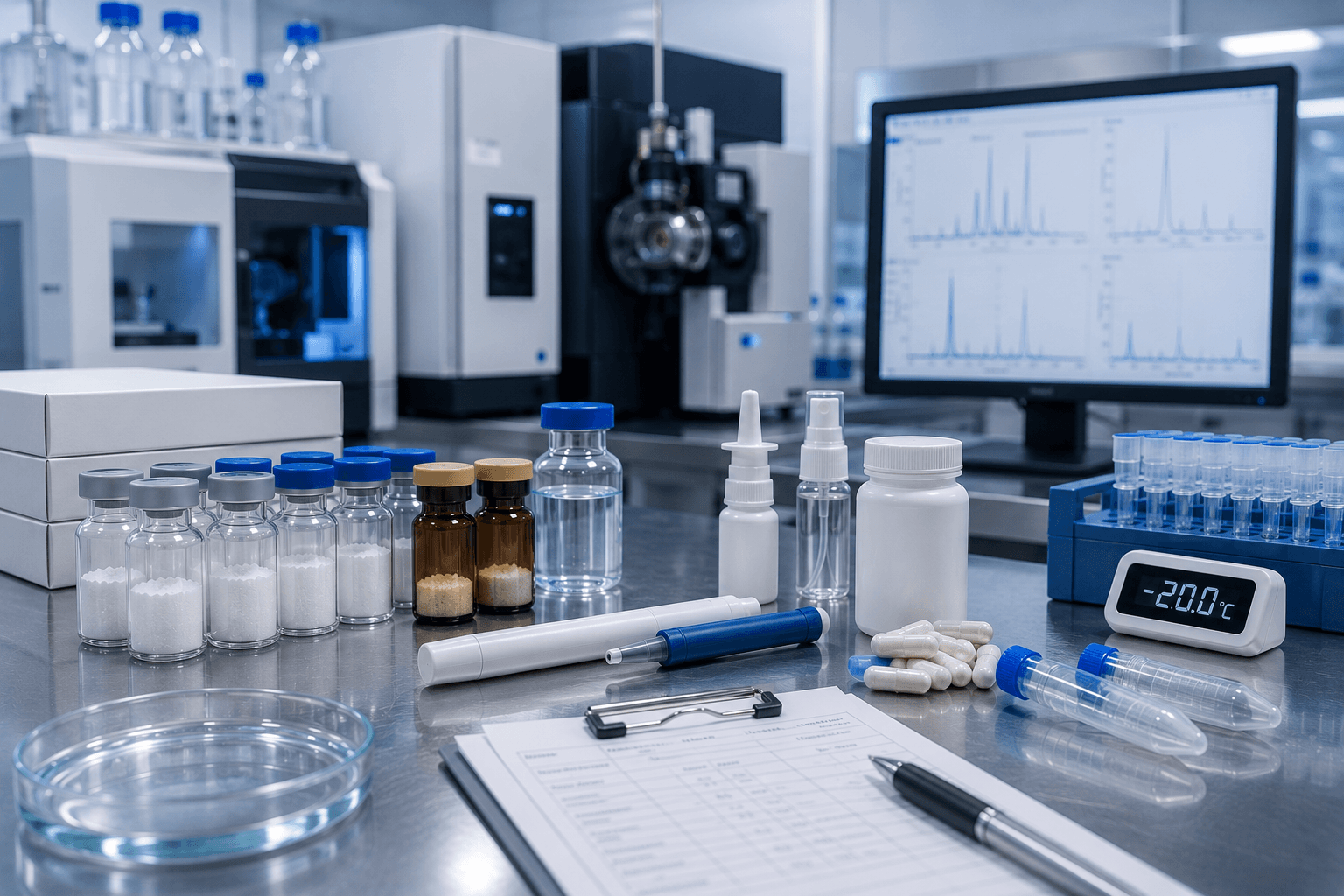
All peptides presented on this page follow the same quality assurance framework. Standard peptides are manufactured to 99% purity or higher, while complex sequences — including longer chains and cyclised structures — are held to a minimum of 98% purity. Purity is determined by HPLC purification and structural identity is verified through mass spectrometry. This testing is conducted at the batch level to ensure that analytical documentation accompanying a product corresponds solely to the particular material being supplied.
All products are sourced directly from manufacturing partners. The supply chain does not include distributors, brokers or intermediary vendors. Full traceability from raw material synthesis through to dispatch eliminates the integrity risks that arise when products pass through multiple hands. Pharma Lab encourages any researcher working with its products to validate compounds through independent third-party analysis, whether by mass spectrometry, amino acid analysis, MALDI-TOF or HPLC.
Formulations vary across the catalogue and include lyophilised vials, pre-mixed nasal sprays, pre-mixed peptide pens and capsules. While some formulations may not be available for every peptide, the options specific to each product can be found on their individual information pages. Bacteriostatic water is provided for researchers who require a verified reconstitution solution.
Storage Recommendations
Maintaining peptide integrity across the catalogue relies on proper storage practices. Lyophilised peptides should be stored at minus twenty degrees Celsius or lower for long-term preservation. Reconstituted peptide solutions should be frozen in single-use aliquots immediately after preparation to prevent degradation from repeated freeze-thaw cycles. Capsule and nasal spray formulations carry their own storage recommendations but generally need to be kept in a cool, dry environment away from direct sunlight. Pharma Lab includes detailed storage guidance for all products, helping researchers maintain sample integrity from delivery through to protocol completion.
Important Information for Researchers

All products listed on this page and sold by Pharma Lab are intended exclusively for in-vitro laboratory research. They are not intended for use in humans or animals, and must not be consumed. These materials must not be classified as drugs, food products or cosmetics. They must not be mislabelled, repackaged, or used for any purpose that contradicts their designation as research materials.
All product information published by Pharma Lab is provided for educational and informational purposes only. Nothing on this page, or on any other pages of the Pharma Lab website, is intended to diagnose, treat, cure or prevent any disease or condition. The research contexts presented above reflect published scientific literature and should be interpreted accordingly, not as therapeutic guidelines.
All Pharma Lab products should be handled and used only by appropriately qualified and trained research or laboratory personnel. Purchasers must be at least twenty-one years of age and accept full responsibility for ensuring compliance with all applicable local laws, including those governing the purchase, import and use of research peptides.