
A Commitment Built on Precision and Transparency
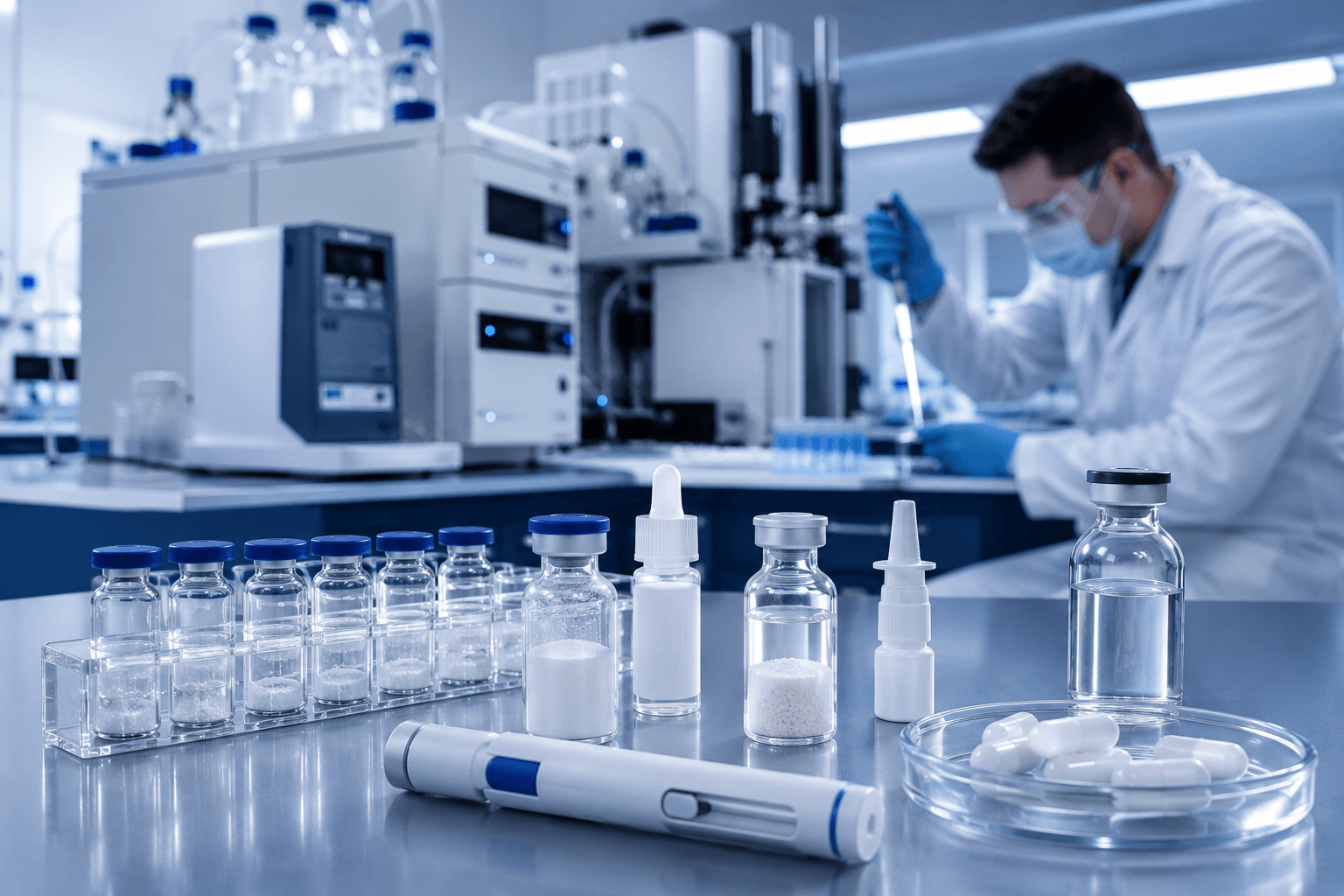
Pharma Lab was founded with a single, clear purpose: to provide scientists, laboratories and academic researchers globally with authentic, analytically verified, high-purity research peptides. That statement is deliberately straightforward, because in a market where unsubstantiated promises and unverified claims have become commonplace, simplicity and honesty matter more than ever.
Pharma Lab operates differently. Every peptide that leaves the facility is manufactured to an absolute minimum purity of 99%, confirmed through HPLC purification and mass spectrometry analysis. For more complex sequences where absolute purity levels are inherently more challenging to achieve, a distinct threshold of 98% or higher is maintained. These are not aspirational figures or marketing statements. They are validated benchmarks, and they apply consistently to every batch produced.
Researchers who work with Pharma Lab come from an extensive array of scientific disciplines. Some are investigating intracellular signalling pathways. Others focus on immune modulation, metabolic regulation, or mechanisms of tissue repair in simulated laboratory conditions. Where these researchers align is in their shared requirement for peptides that are precisely what they are stated to be — designed to specification, tested to standard, and delivered under conditions that preserve their integrity from synthesis through to the laboratory bench.
Pharma Lab provides peptides in a wide range of formulations, including lyophilised vials, nasal sprays, pre-mixed peptide pens and capsules. Bacteriostatic water and the supporting materials that researchers require to properly reconstitute and handle their peptides are also included. All products are intended for research and laboratory use only, strictly in vitro. This is something that is stated clearly and without reservation, as it defines the foundation of all operations.
Products are sourced directly from manufacturers. There are no vendors, no brokers, and no intermediaries separating the point of synthesis from when a product arrives at your laboratory. That direct relationship is not simply a matter of convenience. It is the method through which Pharma Lab ensures that what arrives in your facility was produced correctly and tracked from beginning to end. While it may not be the most prominent business in the field, Pharma Lab stands behind the quality of every product with complete confidence.
Independent verification of results by any unbiased, third-party laboratory is strongly encouraged and welcomed. Whether that involves mass spectrometry, amino acid analysis, MALDI-TOF or HPLC testing, researchers are invited to confirm the quality of any product they receive. If a product does not adhere to the stated standard, Pharma Lab wants to know.
This information is directed at researchers who need a supplier that can provide the materials required to do their work effectively. More than that, it is for those who need a supplier that can tell the complete story of how quality is delivered, sustained and proven — not one who merely claims quality on paper. What follows is a thorough explanation of what Pharma Lab provides, how it operates, and why that matters to the integrity of your research.
Understanding Peptides in Modern Research
A peptide is a short chain of two or more amino acids linked together by peptide bonds. Structurally, peptides are shorter than proteins. Proteins are generally composed of fifty or more amino acid residues and adopt complicated three-dimensional conformations, while peptides typically range from two residues up to approximately fifty. That distinction is important in research, because by virtue of their shorter chain length, peptides possess certain properties that make them easier to synthesise, easier to characterise analytically, and more predictable under controlled experimental conditions.
Amino acids themselves are often referred to as the building blocks of life, and while that description is a simplification, it is not inaccurate. The twenty standard amino acids encoded by the human genome combine in various arrangements to generate the diverse array of peptides and proteins that govern nearly all biological functions. Peptides serve as signalling molecules, hormones, neurotransmitters, and components of the immune system in living organisms. They convey messages between cells, activate or inhibit biochemical pathways, and participate in processes that underpin growth, metabolism, immune response and tissue healing.
For research purposes, peptides are invaluable because of their specificity. A well-characterised peptide interacts with well-defined receptors or biological targets, meaning researchers can use them to study particular pathways or mechanisms without the confounding variables that larger, more complex molecules often introduce. This specificity has fuelled decades of research across fields as diverse as immunology, endocrinology, oncology, neurobiology and metabolic science.
Synthetic peptides — those produced in the laboratory rather than derived from natural biological sources — have expanded the scope of what researchers can investigate. Through synthesis, scientists can generate peptides with precise sequences, guaranteed purity and reproducible batch-to-batch characteristics. This also opens the possibility of creating analogues, or modified forms of natural peptides, which may display different stability, receptor affinity or biological activity. These analogues are invaluable in the study of structure–function relationships.
The fields in which peptides are actively researched continue to expand. Immunologists use peptides to study T-cell activation, antigen presentation and differentiation of immune cells. Researchers in metabolic science investigate the roles of peptide hormones in carbohydrate metabolism, appetite signalling and energy balance. In wound healing research, peptides that influence collagen synthesis and cellular migration are studied for their potential applications. In oncology, peptides have been examined for their ability to target processes involved in tumour growth or suppression.
How Synthetic Peptides Are Produced
Methods for synthetic peptide production have matured significantly over recent decades. The dominant approach continues to be solid-phase peptide synthesis, a technique originally described in the 1960s. In this method, amino acids are sequentially coupled onto a growing polypeptide chain anchored to an insoluble resin support. After each coupling step, a deprotection cycle follows, and this sequence continues until the complete amino acid chain is assembled. The peptide is then cleaved from the resin, purified and characterised.
Modern synthetic platforms can generate sequences of significant length and complexity, including cyclised peptides, post-translationally modified peptides and constructs containing non-standard or unnatural residues. This precision is one reason why synthetic peptides have become an indispensable tool in so many fields of biomedical research.
None of this research can be conducted without peptides that are exactly what they are stated to be. Every experiment performed with a specific material is only as valid as the sequence and purity specifications confirmed at the time of manufacture. This is why the quality of peptide supply should never be treated as a secondary concern. It stands at the very foundation of experimental reliability.
Research Peptide Formulations and Formats
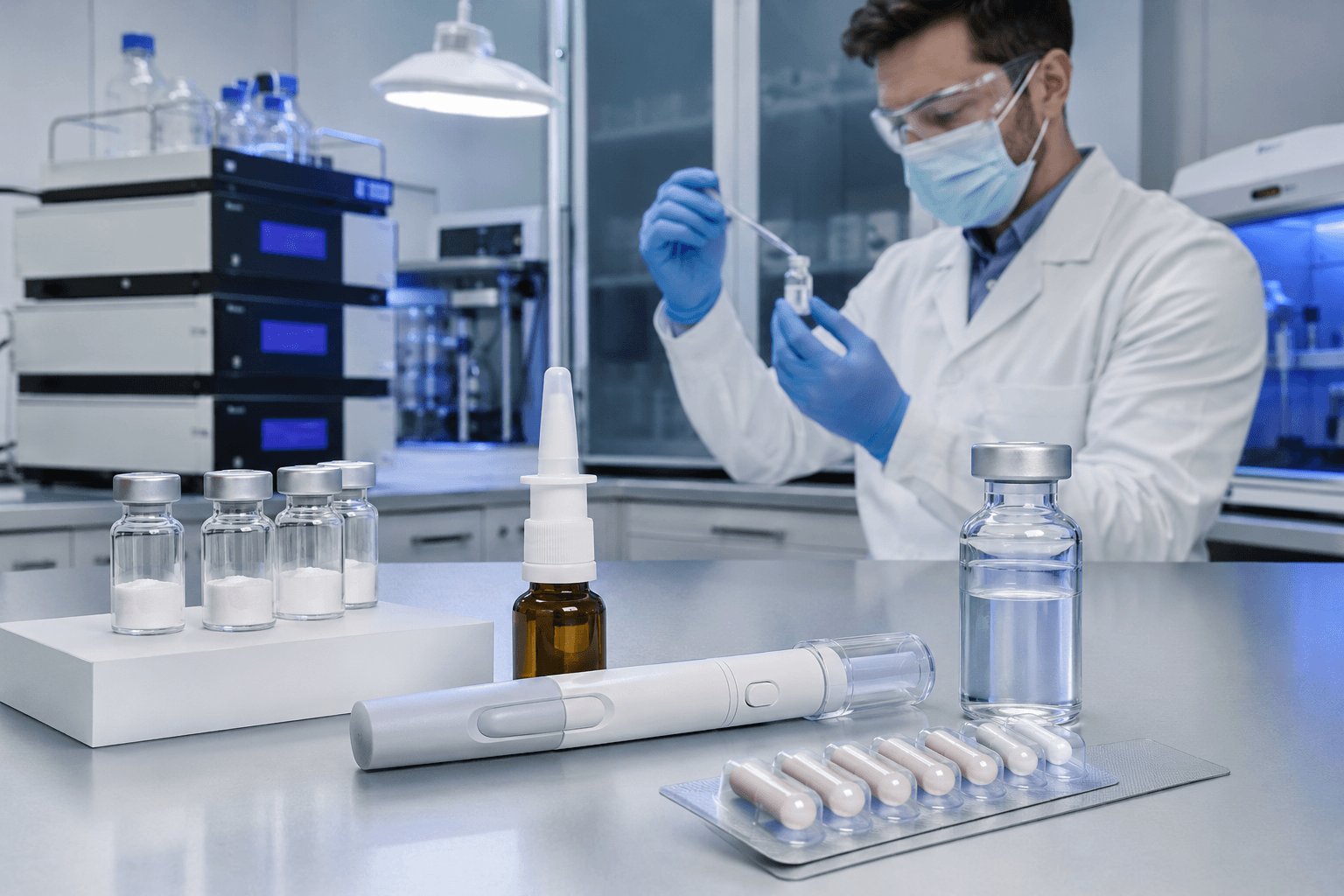
Pharma Lab offers its research peptides in a range of carefully designed formulations. These formats have been developed to meet the requirements of different research protocols and handling specifications based on experimental design. Understanding the differences between each formulation enables researchers to select the most appropriate option for their particular application.
Lyophilised Peptide Vials
The lyophilised vial is the most widely used format in peptide research. Lyophilisation, also known as freeze-drying, is a preservation technique that removes water from the peptide solution under vacuum at low temperature. This produces a dried powder or cake that maintains the structural integrity and biological activity of the peptide over extended storage periods. Peptides held in solution can undergo hydrolysis, oxidation or microbial degradation, whereas a properly stored lyophilised peptide remains stable.
Each vial undergoes a nitrogen flush during the manufacturing process to remove oxygen and other potential contaminants. This step is particularly important for peptides containing oxidation-sensitive residues such as methionine, cysteine or tryptophan. The physical appearance of the lyophilised cake can vary between batches — it may present as a fluffy white powder, a thin film along the interior vial wall, or a compact disc at the base. Factors such as concentration prior to lyophilisation, amino acid composition, environmental conditions during the process, and even trace amounts of moisture vapour influence the final appearance. During transit, the cake may shift or break. None of these visual variations affect the quality, potency or quantity of peptide contained in the vial. The filling process is automated, and every vial within a batch contains the same precise amount.
Nasal Spray Peptides
For selected peptides, Pharma Lab offers a pre-formulated nasal spray option. These arrive pre-prepared, with the peptide already resuspended in an appropriate vehicle and loaded into a metered delivery device. The nasal spray format is particularly relevant to research that explores mucosal absorption, bioavailability from inhalable formulations, and protocol development in areas where consistent, reproducible dosing is required. It removes the reconstitution step from the researcher's workflow, which can be a meaningful advantage in studies where standardisation of the delivery format is essential.
Pre-Mixed Peptide Pens
Pharma Lab also provides peptides in a pre-mixed pen format. These consist of a reconstituted peptide solution contained within a device that dispenses precise increments for each experimental application. The primary advantage of this format is dosing precision. Reconstitution is performed under controlled manufacturing conditions, eliminating the potential variables introduced by manual reconstitution in a laboratory environment. The pen format provides a practical benefit where research protocols necessitate precise and reproducible quantities of peptide.
Peptide Capsules
Peptides in encapsulated form are available for experimental research where this format is appropriate to the study design. Each capsule contains an exact, specified amount of peptide, and the encapsulation is designed to preserve the stability of the active substance. This format is often employed in the context of certain in-vitro research protocols where the capsule serves as a controlled delivery vessel.
Bacteriostatic Water and Reconstitution
Pharma Lab also provides bacteriostatic water as part of its peptide supply. Bacteriostatic water is specifically intended for the reconstitution of lyophilised peptides. Unlike sterile water for injection, bacteriostatic water contains a low concentration of benzyl alcohol (typically 0.9%), which inhibits microbiological growth. This allows reconstituted peptide solutions to be stored for short periods without risk of contamination.
Reconstitution is a straightforward process, but there are important subtleties to understand. The bacteriostatic water should be introduced gently, directed along the interior wall of the glass vial rather than onto the lyophilised peptide cake directly. This prevents foam formation and avoids high-energy impact that could damage the peptide. The powder will dissolve effectively when mixed gently and swirled, without shaking. Vigorous shaking should be avoided as it may lead to denaturation or aggregation in some sequences.
Peptide solubility in bacteriostatic water varies widely depending on the amino acid composition. Some sequences with a high proportion of hydrophobic residues may present reconstitution challenges. In such cases, solubility can be improved by the addition of small volumes of dilute acetic acid for basic peptides, or dilute aqueous ammonia for acidic sequences. While researchers can always source their own reconstitution materials, Pharma Lab provides bacteriostatic water for those who prefer a verified, quality-assured supply.
Purity and Integrity of Every Peptide
The quality of a peptide is not something that should be taken on faith or assumed. It must be proven, documented, and made available for independent verification. Quality assurance at Pharma Lab is a comprehensive process that covers every stage of the supply chain, from the sourcing of manufacturing partners through to the dispatch of each individual order.
Every peptide is manufactured to a purity of 99% or higher. For complex sequences — including longer chains, cyclised structures and peptides containing non-standard amino acids — the minimum purity level is 98%. These are not marketing claims. They are analytical standards, verified using two complementary methodologies that together provide a complete characterisation of each product.
HPLC Purification
The first methodology is high-performance liquid chromatography. HPLC is used to purify the target peptide from the by-products of synthesis, including truncated sequences, deletion variants and other impurities that arise during solid-phase peptide synthesis. The purified peptide is then harvested, lyophilised and subjected to a second stage of quality control.
Mass Spectrometry Analysis
The second stage involves mass spectrometry analysis, which identifies the molecular weight of the purified peptide. When the observed molecular weight closely matches the value predicted from the amino acid sequence, it provides strong confirmation that the structure is correct. Together, HPLC purity data and mass spectrometry confirmation give researchers the two most important pieces of information: the product is pure, and it is the correct molecule.
Batch-Level Testing
This testing is not performed on a random sample from each batch. It is conducted at the batch level. Batch-level testing is more costly and complex than sampling-based methods, but it is the only approach that provides assurance at the level individual researchers actually require. A certificate of purity based on a different batch, manufactured at a different time and under potentially different conditions, offers an extremely limited degree of confidence. Pharma Lab ensures that the analytical documentation accompanying each product corresponds directly to that specific material.
Independent Verification Encouraged
Beyond its own testing, Pharma Lab actively promotes independent verification. Researchers are encouraged to submit products for analysis at any unbiased, third-party laboratory. Recommended analytical methods include mass spectrometry, amino acid analysis, MALDI-TOF mass spectrometry and HPLC. This approach is not merely tolerated — it is actively welcomed. If a researcher is able and motivated to independently verify a product, Pharma Lab fully supports that effort.
Direct Sourcing for Product Integrity
A fundamental element of quality assurance at Pharma Lab is direct sourcing from manufacturers, rather than through distributors or brokers. All products in the catalogue are tracked from synthesis through purification, testing, packaging and dispatch. There are no hidden stages in the supply chain — only points at which a product is handled by identifiable, accountable parties. This direct relationship also provides insight into manufacturing processes, quality systems and long-term consistency.
Documentation forms a cornerstone of this quality framework. The analytical data accompanying each vial of peptide applies solely to the particular batch from which that vial was drawn. It is not a generic certificate used across production runs. It is a specific record of the purification and characterisation performed on that material. This level of traceability is an essential requirement for researchers working under formal quality management systems, and it is something Pharma Lab provides as standard practice.
Worldwide Peptide Supply and Delivery

Pharma Lab is a global operation, because research itself recognises no borders. Shipments are made to the United Kingdom, across Europe, to all fifty United States and to researchers and institutions worldwide. The infrastructure supporting this global reach is built on a single principle: every researcher who places an order should receive their materials quickly, reliably and in perfect condition.
All orders are packed and dispatched within one to two working days of payment being received. Orders placed over a weekend are processed on the following Monday. Delivery timescales begin from the moment of dispatch and depend on the shipping option selected. Premium shipping typically provides delivery within approximately three to five working days, while standard shipping takes anywhere from ten to fourteen working days to arrive. Both options are available internationally, although delivery windows may vary by destination country.
Packaging and Privacy
Packaging is designed with protection and discretion in mind. All orders are bubble-wrapped to prevent damage during transit. Only the addressee's details appear on the exterior of the package — there is no branding, no product descriptions and no other markings that indicate the contents. The return address likewise does not reveal what is inside. This ensures that orders arrive safely and discreetly, which is particularly important for researchers in institutional settings where packages may be received through central mailrooms or receiving departments.
Shipping Protection
Pharma Lab also offers shipping protection. In the event that a product is damaged during transit, it is replaced. If a replacement shipment is also not received, a full refund is issued. Pharma Lab recognises that researchers work to deadlines, and a lost or damaged shipment represents not merely an inconvenience but potentially weeks of delay in a research programme. This policy exists to address that reality. Shipping protection also covers situations where a parcel is seized by customs, under the same replacement terms.
Import Considerations
All researchers are strongly encouraged to determine the relevant import restrictions in their region before placing an order. Research peptide shipments generally do not encounter difficulties at customs, but regulations differ between countries, and it is the purchaser's responsibility to ensure compliance with local laws.
Regional Fulfilment
To better serve researchers across different geographies, Pharma Lab has established regional supply operations. The supply chain has been optimised to keep transit times to a minimum, ensuring that peptides arrive in proper condition whether the destination laboratory is in London, Stockholm, New York or anywhere else. Regional fulfilment helps eliminate extended shipping durations for temperature-sensitive materials while maintaining operational consistency in product handling and quality control.
Peptide Storage and Handling for Research Purposes
All the care invested in synthesis, purification and shipping is only meaningful if a peptide is handled correctly once it reaches the laboratory bench. Proper storage and handling throughout the duration of a research programme are essential practices for maintaining peptide integrity. This section discusses some of the key considerations that researchers should keep in mind.
Temperature, Light and Humidity
A properly stored lyophilised peptide is a remarkably stable compound. The three main factors that affect stability are temperature, light exposure and humidity. Unopened vials should typically be stored at minus twenty degrees Celsius or lower. At these temperatures, the rate of chemical degradation is exceedingly slow, and most lyophilised peptides will retain their stated purity for years. Short-term storage in a refrigerator at two to eight degrees Celsius is acceptable, but it is not recommended as a long-term solution when freezer storage is available.
Light exposure presents another consideration. Peptides containing photolabile residues — particularly tryptophan or tyrosine — can be degraded by ultraviolet or strong visible light. Storing vials in darkness or wrapping them in foil is a simple and effective way to mitigate this risk. Humidity is the third factor. Lyophilised peptides are inherently hygroscopic, meaning they can rapidly absorb moisture from the surrounding air. When moisture is reintroduced, the peptide exits its stable, dry state, and hydrolysis and other degradation pathways may resume. Sealing vials until the moment of use and allowing them to reach room temperature before opening — to prevent condensation forming inside — are both examples of good laboratory practice.
After Reconstitution
The stability profile of a peptide can change considerably once it has been reconstituted. A peptide in solution is inherently less stable than its lyophilised form. Reconstituted peptides should be used as promptly as practical. If storage is necessary, single-use aliquots can be prepared and frozen at minus twenty degrees Celsius. Repeated freeze-thaw cycles should be avoided, as they can promote aggregation and loss of biological activity in sensitive sequences. Bacteriostatic water, when used as the reconstitution vehicle, provides some protection against contamination through its antimicrobial properties, although this does not extend the chemical stability of the peptide itself.
Understanding Visual Variations
As noted earlier, the appearance of lyophilised peptides after transit can raise questions. The cake may be loose, compacted, adhered to the vial wall or partially broken. These are all typical consequences of lyophilisation and transport. The automated filling process ensures that each vial contains the precise declared amount of peptide, regardless of how the dried material has settled or compacted. Visual differences should not be confused with quality differences.
Supporting the Research Community

Within the research ecosystem, a peptide supplier occupies a unique and important role. The materials provided are not consumer products. They are instruments upon which scientists depend to collect data, test hypotheses and advance knowledge across disciplines. That role carries responsibilities that extend well beyond simply fulfilling orders.
The Importance of Consistency
Perhaps the most fundamental of those responsibilities is consistency. When a researcher designs an experiment using a specific peptide from Pharma Lab, they should be confident that subsequent purchases of the same product will perform identically. Batch-to-batch consistency is not a luxury — it is a requirement for reproducibility. If a peptide changes in purity, in the ratio of active to degraded material, or in its reconstitution characteristics from one order to the next, the researcher cannot be certain whether observed changes are due to their experimental variable or to variability in their materials. That uncertainty undermines the value of the entire investigation.
Pharma Lab addresses this through rigorous manufacturing and quality assurance processes, and through transparency of operations. The website serves as a repository of research-relevant articles and peptide information, published for educational purposes. These are not marketing materials presented in a scientific format. They are written for the audience of researchers who need to understand the molecules they are using, the evidence base supporting them, and the technical considerations surrounding their use in a laboratory setting.
Honesty and Integrity
The essence of Pharma Lab can be expressed in straightforward terms: honesty, integrity, and a deep respect for the work that researchers are doing. Product qualities are never exaggerated. Claims do not extend beyond what can be demonstrated through testing. And customer support is based on providing what researchers truly need — not a sales pitch, but factual information delivered by individuals who understand the products and the contexts in which they are used.
Integrity also means being clear about what the products are not. These are research materials, intended for research purposes. They are not therapeutics, supplements or consumer goods. This distinction is drawn clearly and without ambiguity, because it defines the regulatory and ethical environment in which both Pharma Lab and its customers operate.
Communication and Support
A strong supplier relationship depends as much on communication as it does on product quality. When a researcher contacts Pharma Lab with an enquiry about solubility, storage or suitability for a particular protocol, they deserve a response from someone who understands the science — not a scripted reply from a call centre. The customer service team approaches every enquiry with the commitment to providing a reasoned, accurate answer. The priority is always to give a thorough response rather than risk offering one that is incomplete or unhelpful.
Common Questions About Research Peptides
Researchers sourcing peptides for the first time, or evaluating a new supplier, tend to have a consistent set of questions. Rather than presenting these in a traditional question-and-answer format, this section addresses the most common subjects with context and direct explanations.
Peptides and Proteins — Understanding the Distinction
This is a distinction that arises frequently, particularly among researchers new to peptide work or those transitioning from related fields. Structurally, the difference largely comes down to scale. Peptides are shorter chains of amino acids, typically fewer than fifty residues in length, while proteins are longer and adopt complex, folded three-dimensional structures corresponding to their biological functions. Although the boundary is somewhat arbitrary — molecules with forty to sixty residues might be classified as either — the practical distinction remains useful. In the context of research peptide supply, the term refers to shorter, well-defined sequences that can be readily synthesised and characterised.
Why Lyophilised Powder Rather Than Solution
This is an important practical question. Peptides in aqueous solution are vulnerable to numerous degradation pathways, including hydrolysis, oxidation and microbial contamination. Lyophilisation removes the water, effectively halting these processes and enabling the peptide to be stored as a dry, stable powder with minimal loss of purity or activity over extended periods. The researcher reconstitutes the peptide at the point of use, ensuring the material is as fresh as possible when it enters the experiment.
Independent Testing of Products
The position of Pharma Lab on this subject is unequivocal. Researchers are actively encouraged to submit products for evaluation by any unbiased laboratory. Recommended analytical methods include mass spectrometry for molecular weight confirmation, amino acid analysis for compositional verification, MALDI-TOF mass spectrometry, and HPLC for purity assessment. Independent verification represents the highest standard of confidence in a supplier, and Pharma Lab supports it wholeheartedly.
Available Formulations
Pharma Lab provides peptides in lyophilised vials, nasal sprays, pre-mixed peptide pens and capsules. Each format is suited to different research applications, and the most appropriate choice depends on the requirements of a given experimental protocol. Bacteriostatic water is also available for researchers who prefer a verified reconstitution vehicle supplied alongside their peptides.
Selecting the Right Peptide
The choice of appropriate peptide for a given research application ultimately lies with the researcher, and Pharma Lab respects that expertise. However, with a broad selection of sequences available, not every researcher — particularly those new to peptide work — will immediately know which product best suits their protocol. The peptide information published on the Pharma Lab website is designed to support this decision-making process by providing evidence-based descriptions of individual peptides, their known biological activities in experimental contexts, and the literature supporting their application. This content is descriptive rather than prescriptive, intended to supplement the investigator's own expertise and reading of the primary literature.
Storage After Reconstitution
This is an area that sometimes receives less attention than it deserves. The stability of a reconstituted peptide is limited over time. The recommended approach is to aliquot the solution into single-use amounts and freeze at minus twenty degrees Celsius. Repeated freeze-thaw cycles lead to degradation and should be avoided. A reconstituted peptide solution has a limited shelf life even when stored at refrigerator temperatures, and should typically be used within days, with appropriate precautions against contamination.
Important Information for Researchers

Pharma Lab is committed to the responsible supply of research materials, and this section details the principles upon which all products are sold. These are not mere formalities. They represent the regulatory framework that governs the supply of research peptides, and the standards to which any responsible supplier should be held.
All products sold by Pharma Lab are intended for in-vitro research and laboratory use only. This is not a conditional statement. It is the defining principle of operations. These products are not intended for human or animal use or consumption. They must not be categorised as drugs, food products, cosmetics or medical formulations, and under no circumstances should they be mislabelled, repackaged or used contrary to their stated purpose.
All product information and articles published on the Pharma Lab website are provided for informational and educational purposes only. Nothing on the website is intended to diagnose, treat, cure or prevent any disease or health condition. The information published is designed to support the research community with accurate, evidence-based content about the peptides offered and their scientific basis.
The use and handling of Pharma Lab products is limited to suitably qualified and trained research or laboratory personnel who possess the education, equipment and facilities necessary to work with these materials safely and effectively. The purchaser assumes full responsibility for understanding the proper handling of research-grade peptides and agrees to use them only as specified.
There is a minimum purchaser age of twenty-one years. Buyers are advised to conduct their own due diligence and ensure they are fully informed of the local laws surrounding the purchase, import and use of research peptides before placing an order. The customer is responsible for compliance with all applicable local, national and international regulations.
Designed for Researchers, Trusted by Researchers
Pharma Lab was built to address a straightforward need: researchers require an ongoing supply of high-purity peptides, supplied reliably, tested thoroughly and delivered at speed to laboratories anywhere on the planet. Every aspect of the business model — from direct manufacturer relationships and batch-level quality assurance to the suite of peptide formulations and global shipping infrastructure — is built around that need.
The research community does not require another vendor making general, generic statements about quality without the evidence to support them. What researchers need is a supplier that can describe precisely how each peptide is purified, how its identity is confirmed, and how its integrity is maintained from the moment of synthesis to arrival at the laboratory bench. That is exactly what Pharma Lab provides, and it is the foundation upon which the company has built its reputation.
Whether you are an established researcher with decades of experience handling peptides, or a laboratory professional evaluating suppliers for the first time, the standard remains the same: proven purity, fully transparent processes, and honest guidance that supports your work rather than complicating it.
Pharma Lab was built on the principle that trust in this industry is not a given. It is earned through consistency, transparency and accountability with each and every product. That is not a tagline. It is the way the company operates — order to order, batch after batch, year after year.
Pharma Lab supplies the materials. The science is yours.